Filmmaker Antonioni Dead at 94

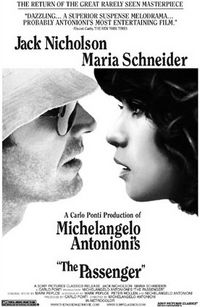
2007_7passenger.jpg Sometimes things align at just the proper moment: the Siskel is wrapping up a restropective of the master filmmaker, who passed away peacefully Monday evening. As it so happens the last screening in the series is Thursday, when The Passenger with Jack Nicholson will be shown. The film ends with one of the most amazing, haunting sequences in film history. It's well worth catching on the big screen.

His death, coming so close on the heels of Ingmar Bergman's demise, can't help but make us think wistfully of what international filmmaking once was. One small example: in 1964, Richard Harris was nominated for Best Actor for his performance in This Sporting Life; and he also starred in Antonioni's exceedingly difficult Red Desert, arguably the most challenging narrative film to be released that year.

Can you imagine Will Smith in a Wong Kar-wai film?

image via Wikipedia

Email This Entry


Comments (8) [rss]

They just don't make em like they used to.

International filmmaking is as strong as ever. What gives the impression of a decline is the state of film distribution along with the noise generated by mass-marketed blockbusters and the cult of celebrity (e.g., the focus on acting, on competitive awards). Great filmmaking still abounds - you just have to look a bit harder and be in the right place at the right time.

Jason,

I didn't mean to imply that international filmmaking is dead. Far from it. What I miss, though, is the time when there was a sort of pseudowacky "anything goes" attitude, with major stars (and studios) taking risks and making offbeat choices, both in terms of stories and filmmakers. Partially of course it was a way to hedge bets, throw things sgainst the wall to see what would stick (and make money). Now all the majors are playing it safe. I totally agree that the current state of things has a lot to do with the screwy distribution "system," which is 95% about profit. Tons of great stuff is getting made every year, but to see it is still a major obstacle.

Rob,
You seem to be talking about filmmaking from an entertainment/sociological/psychological perspective (stars, studios, stories); I'm coming from an art perspective (aesthetic experience). It gets confusing and frustrating to talk around words like "filmmaking" which are used in so many contexts, and often used in a manner that ignores entire worlds of cinematic possibilities. (Bet your life savings: There will be no front-page obits or Chicagoist posts when Peter Kubelka dies.)
In other words: Do you really mean "anything goes"?

In fact, the word of Edward Yang's death wasn't a blip in most of the dailies.

Awww, c’mon guys, Rob is right: there seemed to be a period (mid-1950’s through about 1979) when the ‘commercial’ film and the ‘art’ film seemed to be colliding head-on – and people/Joe-shmo were actually going to SEE them. “Blow-up” is a good example of that. “The Silence” is another. A great deal of the truly interesting American films of the ‘70’s (that again, people actually went to see), sprang from the pool of Bergman, Antonioni, Fellini, etc. THAT is what Rob is talking about.

And I realize that it’s ultra-cool to mention Kubelka’s work, but he’s make 6 VERY short, very obscure works between the mid-50’s and the mid-‘70’s. That’s hardly in the same thing as the Antonioni canon, which actually has been seen by more that several film students in their avant-garde cinema class.

#6 commented: "there seemed to be a period (mid-1950’s through about 1979) when the ‘commercial’ film and the ‘art’ film seemed to be colliding head-on"

They weren't so much colliding as separating, since that was the time period in which the notion of cinema as an artform exploded among certain cultural and institutional elites (and the socio-economic classes they influence).

But it is wrong to claim, as the original post seemed to claim, that the excitement and energy of that era's film culture was due to some extraordinary quality of the cinema of that era ("thinking wistfully of what international filmmaking once was").

re: Kubelka: The length of his works, and his obscurity in the broader culture (even arthouse culture) are obvious facts. So what? Those facts are irrelevant to any discussion of film as an artform, and of the works created by filmmakers in the '60s/'70s and today.

(For the record: Kubelka's seventh film "Poetry and Truth" came out a couple of years ago. And it is not impossible for those, such as myself, who lack the privileged access of students or critics to see Kubelka's films, even repeatedly, if you live in or are able to visit certain cities -- not significantly more difficult than seeing certain Antonioni films.)

shouldn't there be a chicagoist policy against the number of posts that one person can reply to in one larger post? i think that if someone posts three or four or 51 times in one section, that person should just pour their thoughts into their blog and spare the rest of us their genius. otherwise you may get into a Mr. Angry Poetry Guy situation again. (But i'm certain this will be replied to by a serial replier -- too bad i'll have already moved on).

Post a comment (Comment Policy)

Tips

About Chicagoist

Chicagoist is a website about Chicago. More

Editor: Marcus Gilmer
Publisher: Gothamist

Contribute

Latest Tip:

NYT article detailing how the city will spend all of the money from the parking meter lease by 2010.
[more]

Latest Photo:

Recent Comments

Subscribe

Use an RSS reader to stay up to date with the latest news and posts from Chicagoist.

All Our RSS