Ask Chicagoist: Recycle Plastic Grocery Bags?
By Thales Exoo in Miscellaneous on May 15, 2008 4:43PM
 Dear Chicagoist,
I live in the 1st Ward, which is part of the Blue Cart recycling pilot program. We got information at the beginning on what to recycle and what not to recycle. Specifically mentioned in the "not" category were plastic grocery bags.
However some grocery store's bags (and some non-grocery stores' grocery-store-like plastic bags) are clearly marked with the recycling symbol and the numeral 4, which suggests to me that the bags are recyclable.
What's the deal? Are they or aren't they? I'm doing my best to recycle everything I possibly can.
Thanks,
Blue Bag Hater / Blue Cart Lover
Dear Recycling Friend,
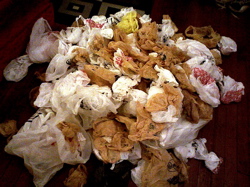
Ah yes. The ever-ubiquitous plastic grocery bag. Banned in San Francisco and by Whole Foods, possibly on their way out everywhere else, and an ever-present feature on the side of American highways, plastic grocery bags seem more apt to multiply than recycle.
Despite that, they are indeed recyclable. Just not through the Blue Cart (yay!) or Blue Bag (boo!) recycling programs. Instead, take them back from whence they came -- in other words, Jewel or Domincks. Both grocery stores have those huge trash can-like bins in the entries where you can stuff the ungodly amount of those bags that you accumulate through your day-to-day consumer activities, where in theory the get sent off somewhere to be recycled into lumber, trash can liners or (go figure) more plastic bags.
Specifically, the types of bags you'll see are Type 2 or Type 4 plastic; the familiar recycling symbol and number will be somewhere on the bag. In other words, bags from grocery stores are fine, but check out the bags you get elsewhere for the symbol -- and don't mix them in until you're certain they're recyclable. The bags bread and produce come in are also usually recyclable in this manner.
Why doesn't the city want the bags? According to an article in Northwestern University's Medill Reports, "paperclips or food scraps in plastic bags prevent them from being put through incinerators, and ... [they have] poor market value compared to materials like paper."
So in light of that, when you drop off your plastic bags, make sure you've cleaned them out; no scraps of food, wrappers from the candy bar you bought on impulse at checkout, or anything on the bag (like drawstrings or paper handles) other than plastic.
The tried and true "reduce, reuse, recycle" seems to be pretty apropos here. Getting some reusable bags for groceries and simply trying to avoid accumulating more bags than is absolutely necessary is obviously the best choice of all, of course. For those you do have, we advocate reusing them as much as possible. Any use where you'd otherwise need some other bag to accomplish the task is a smart move. We use them for kitty litter, but there are innumerable ideas out there. Then, finally, recycle the ones left over.
Image via taberandrew
Feeling environmentally responsible? Need some advice? Email ask(at)chicagoist(dot)com.