Where Real Time Stats Come From
By Benjy Lipsman in News on May 27, 2008 2:44PM
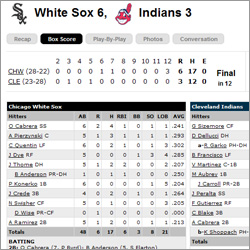 Chicagoist remembers the day when we had to wait for the next morning's newspaper to see whether our team won or not, and we'd pore over the previous night's box scores while eating breakfast before heading off to school or day camp.
Now, we furtively glance at our iPhone under the table to see real time updates while out for dinner.
But how does every pitch, out and home run make it to our handheld gadget or computer screen? The Trib's Eric Benderoff spent a game in the Wrigley Field pressbox watching scorekeeper Jon Passman and explained how his digital account of the game is reported.
Passman, and other scorekeepers like him, use proprietary software developed by Stats LLC to input every bit of minutia about each play in a game. They also keep paper scorecards as well, in the event of technological glitches. Chicagoist spent enough time keeping scoring our high school baseball games to know how hard it is to keep one card with limited info. That they're able to keep two sets of incredibly detailed accounts -- even rating a catch from "routine" to "spectacular" -- is quite impressive.
Passman works for Stats LLC, a Northbrook company who compiles and sells data for all major sports and sells the data to the likes of ESPN, Yahoo Sports, Fox and other media outlets. The data collected is also analyzed by Stats LLC to produce those tidbits shown on screen during televised broadcasts, as well. And these real times numbers are also used to compile those box scores that -- unlike the previous day's stock prices -- still do appear in the papers' sports sections each morning.