Another Chicago Media Forum: Second Verse, Same as the First?
By Kate Gardiner in News on May 22, 2009 5:00PM
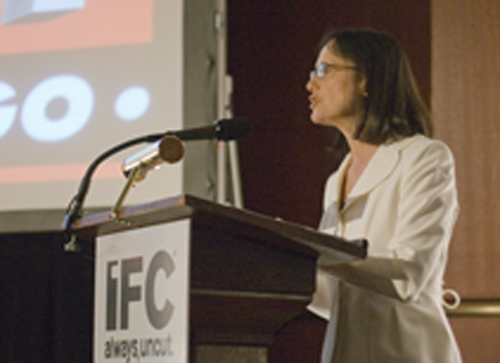


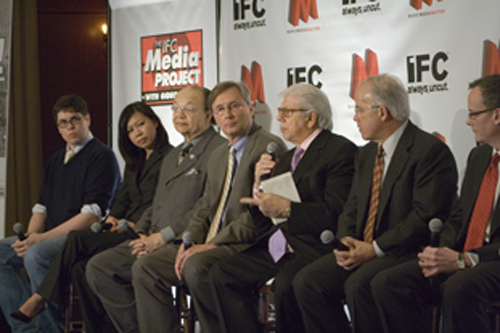
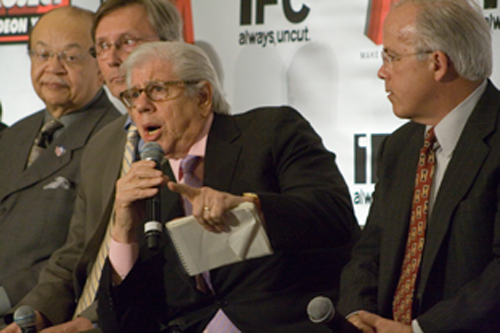
Chicago's journalism elite gathered together Thursday afternoon for yet another group therapy session, this time bringing Carl Bernstein and our beloved editor-in-chief, Marcus Gilmer, into the mix. Covering a sweeping range of topics, the central theme was the future of the news industry. Conclusion? Doom. Oh, and there's no agreeing on life-saving measures. It wasn't that we didn't have the most brilliant minds of the old guard in the conference room at the Newberry Library for the IFC's Make Media Matter series - Bernstein was joined by editors Gerould Kern (Chicago Tribune), Donald Hayner (Chicago Sun-Times), Tran Ha (RedEye) WBBM-TV news director Jeff Kiernan, columnist/editor/host Carol Marin and WVON's Cliff Kelley - it's just that the old guard doesn't know what's going to happen and the new guard, represented only by Marcus and Ha, can't predict the future of their industry.
The panel was introduced by Illinois Attorney General Lisa Madigan, who said that the newspaper industry has as much to dislike about online classified site Craigslist as she does, albeit for different, perhaps less principled, reasons. But, she said, the media plays an integral role in policing the government and encouraging transparency. "As newsroom resources are dwindling, the public's need for news and info has never been greater," she said. "The role of news media as public watchdog has grown."
Madigan said her office is encouraging the growth of government transparency (sunshine) laws in this state, and applauded the efforts of a variety of publications, including the Chicago Tribune. "The public expects the government to put in policies that are essential to restoring trust... I'm putting considerable effort into increasing sunshine."
Kern, commenting later in the panel, said he thought one of the most poignant examples of the problems plaguing the industry was the day his staff at the Tribune published the story about former Illinois Governor Rod Blagojevich's arrest. It was the same day the newspaper published a story about its parent company filing for bankruptcy. Kern said that though his paper, and Chicago's other major daily are failing, they're attempting to restructure to suit the new news environment. "That was the day we said 'The business model is broken,'" said Kern. "We asked, 'How do we build an organization that will match the needs of today?'" Kern said that despite five rounds of layoffs, his paper has hired people in different arenas, and moved resources around internally. "We have more people in the metro section than we did that day," he said. "We've created new departments, we've moved people in, and we've made consumer issues and government watchdog work a keystone of our reporting... We think that solution builds on fundamentals we think are key today... We're a multi-platform organization now."
Don Hayner, whose newspaper is also bankrupt, has cut staff back to about 170 people in the newsroom. He said he thinks traditional newspapers may stay around, but that they might have to look at their product in a different way for funding, "You have to have the product paid for - and that might be the solution," he said. "We were so reliant on an ad-heavy versus product-heavy [revenue model]." He also suggested either pushing up the costs of actual newspapers, or creating a partnership between several news outlets to provide a support system for reporters who challenge government officials. "The nature of the business is a bunch of independent businesses, all playing a collective game of chicken about charging for content," he said. "Freedom isn't free. News isn't free. It takes power."
Bernstein, whose work on Watergate still sends shivers down the spines of most young journalists, said that the reporting game is best left to young people, and that the focus on the publishing mechanism is a distraction. "Most important thing a reporter does is to decide "what is news." It's a tricky function," he said. "There's a huge danger that as we move towards this new model, [we're going to lose that.]"
"I hate the word content... Almost anything qualifies as content," added Marin. "But news is 'Wow, I didn't know that was going on in my city hall.'"
For more details from the forum, check out the live tweets posted here and WBEZ's audio from the event. For more about the Make Media Matter series, visit the IFC's media project.