"What We Need Is People" - Occupy Chicago, One Week Later
By aaroncynic in News on Oct 3, 2011 2:00PM
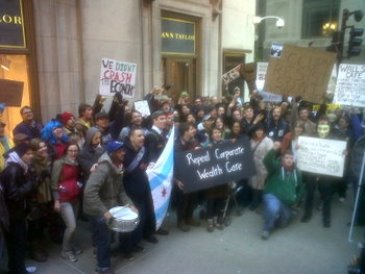
Image Credit: Aaron Cynic/Chicagoist
As I strolled towards what otherwise sounded like a standard street corner in Chicago's financial district on a Saturday - mostly silent, aside from a few passing cars - I heard the faint sounds of singular voices carried over a megaphone. The first week, I saw a handful of passionate people attempting to spark an interest in their message. One week later, I found at least 160 vibrant and energized demonstrators working together to construct a sense of direct democracy between them, complete with committees, supply lines, and tech support.
“We went from having just a handful of people at the beginning...now everyday there's dozens and dozens of people during the daytime and as the evening goes on, as people get out of school and out of work. Yesterday we had over 100 people at our last general assembly meeting, so the numbers are just going through the roof,” said Mark Banks, a member of the movement who has spent the majority of his time in front of the Federal Reserve since the occupation began.
After a self-described general assembly meeting where more than a hundred demonstrators discussed tactics and made some decisions on overall goals, they headed through the city streets, marching to express solidarity with Occupy Wall Street members arrested in New York City. During the assembly, news was received that hundreds of people were arrested on the Brooklyn Bridge after the NYPD corralled marching demonstrators. At least 700 were arrested. I asked Mark what the relationship between the demonstrators in Chicago and the police has been. He told me that it had been good, even if not always ideal. Ultimately, Mark said “ there have been some officers, especially on the ground level that have expressed an understanding of what we're doing and even solidarity with the idea.”
While the larger movement might be getting some pretty big endorsements, from actors like Susan Sarandon to intellectuals like Noam Chomsky and rappers like Lupe Fiasco, the biggest thing Mark said the movement needs is regular, everyday people.
“It's always great to have all the support online and have all the material support but by having people out here,” Banks said. “Human beings are visual creatures. When you see something, you begin to think about it...This is a transformation of people's political consciousness, and people are catching onto that.”