The Case For Kegged Cocktails
By Roger Kamholz in Food on Jan 27, 2012 7:40PM
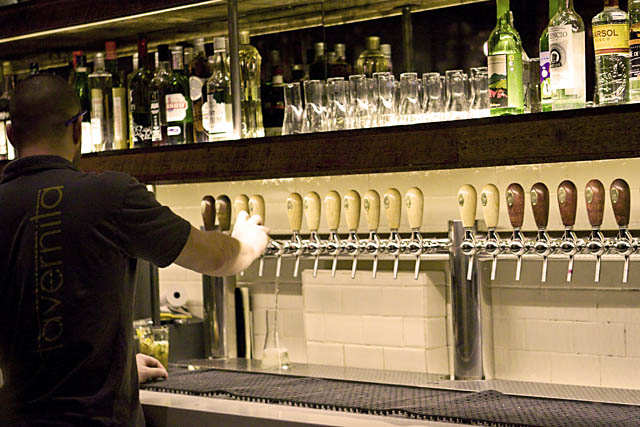
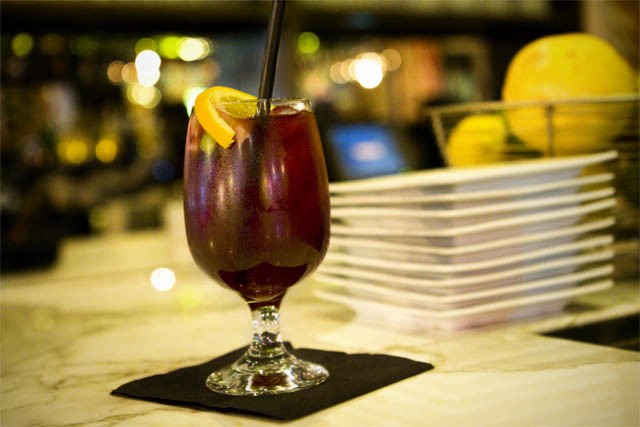
Based on a quick scan of its back bar, you may think that Tavernita, the newly opened Spanish restaurant by Chef Ryan Poli, is trying to give beer meccas like Bangers & Lace a run for their money. A neat row of more than 20 anonymous wooden tap heads all stand at attention, presumably ready to serve up some suds. (The word "tavern" is right there in the name, after all.) However, while some of those lines do carry beer, the rest are actually serving up everything from kegged red and white wines, to house-made sangria and original cocktails. Tavernita is the latest in a growing group of bars and restaurants in town that are presenting alcoholic beverages other than beer on draft.
While draft beer has undoubtedly become ubiquitous, the notion of having a cocktail that's simply drawn from a spigot may seem, for some people, to fly in the face of their expectations of what enjoying a cocktail entails - which probably, at least in part, is about getting a fresh, custom-made drink to order. With six kegged cocktails on tap, Tavernita is betting big that people will warm this new delivery system. But there's already evidence that diners in Chicago are increasingly accepting of kegged cocktails, wines and spirits. We reported last month about the Carpano Antica red vermouth on draft at Sable Kitchen & Bar. Paris Club and Bombay Spice both serve kegged wine. And at Yusho, the new Japanese restaurant in Logan Square, a rotating carbonated cocktail is a popular item on its drink list.
Alex Bachman, bar manager at Yusho, says that the restaurant has been refilling its 5.15-gallon cocktail keg about every four days. So far, Bachman has done a force-carbonated Paloma (a tequila and grapefruit cocktail) and his version of Chu-Hi (Japanese alcoholic soda). Currently, Yusho has a Dark 'n Stormy on draft.
"In a keg format, everything is carbonated uniformly, and that interested me," Bachman says. "Making Dark 'n Stormys over the years, or Moscow Mules or Gin & Tonics or Champagne cocktails, one thing that always frustrated me was that they had a tendency to lose their carbonation, having come in contact with other non-carbonated ingredients." (Adding ginger beer to flat rum and lime juice means that, by volume, only part of the drink is actually carbonated.) Bachman adds, "I thought if we could load everything into a keg, force-carbonate it and then hook up a tap, it would maintain the integrity of the cocktail and hopefully make it better."
But what about the non-carbonated kegged cocktails at Tavernita? Could they truly taste as good or better than a drink made fresh? Well, there's a strong argument that they can at least be as fresh. While contact with oxygen can quickly degrade the citrus juices common in cocktails, the nitrogen (or carbon dioxide, in the case of carbonated drinks) used to pressurize wine and cocktail kegs is less reactive and thus, helps to keep the contents fresh. And at Tavernita, the sangria and cocktail kegs are equipped with agitators that periodically shake the mixture to keep the ingredients well incorporated.
From what we hear, expect to see more kegged and carbonated cocktails in the near future, most notably at the forthcoming Trenchermen. Barman Tona Palomino has been showing off his penchant for carbonated cocktails at preview events leading up to the restaurant's debut.
What's your opinion on kegged wine and cocktails? Are you ready to embrace this new trend?